
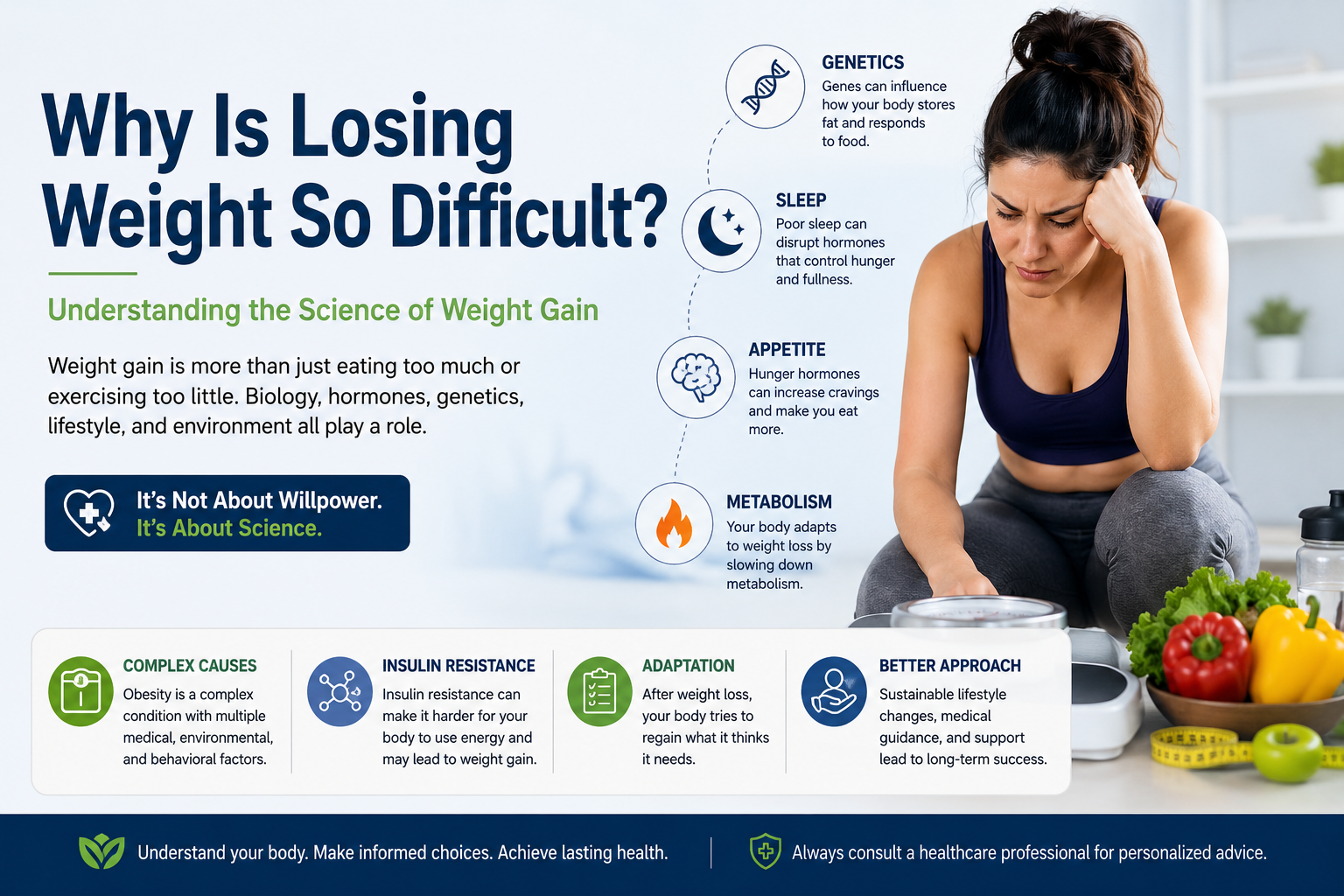
Losing weight is often described as a simple equation: eat less, exercise more, and the extra weight will disappear. But for many people, weight management is much more complicated. So, why is losing weight so difficult? The answer involves much more than willpower. Appetite-regulating hormones, metabolism, genetics, sleep, physical activity, insulin sensitivity, medications, environment, and the body’s natural response to weight loss can all influence body weight.
Obesity is considered a complex health condition influenced by multiple biological, behavioral, environmental, and genetic factors. Understanding these factors can help people approach weight management more realistically and sustainably.
3 Causes of obesity
Obesity develops from a mix of interacting factors rather than a single cause. At its core, three causes of obesity are
- Sustained energy imbalance
- consuming more calories than the body expends
- Hormonal imbalance
But what drives that imbalance is complex: genetics can influence metabolism, fat storage, and appetite regulation; hormonal factors like leptin resistance, insulin resistance, and cortisol imbalances affect hunger and fat accumulation; poor sleep and chronic stress disrupt the hormones that regulate appetite; a sedentary lifestyle combined with easy access to calorie-dense, ultra-processed foods increases intake while lowering expenditure; certain medications (like steroids, antidepressants, and some diabetes drugs) can cause weight gain as a side effect; and socioeconomic factors such as food deserts, lack of time, and limited access to healthcare or fitness resources further compound the risk.
Factors affecting weight loss
Weight loss isn’t determined by diet and exercise alone — it’s shaped by a web of biological, behavioral, and environmental factors working together. Understanding what influences your body’s ability to lose weight is the first step toward setting realistic, sustainable goals. Here are the key factors that affect weight loss:
Appetite and Hunger Hormones
One reason why is losing weight so difficult is the body’s sophisticated system for controlling hunger and fullness. Several hormones and signals communicate between the digestive system, fat tissue, pancreas, and brain to regulate appetite and energy balance. Two commonly discussed hormones are ghrelin, which is associated with hunger, and leptin, which is involved in signaling fullness and energy stores.
When a person loses weight, biological signals can increase appetite and encourage the body to restore some of the lost weight. Research highlighted by the National Institute of Diabetes and Digestive and Kidney Diseases (NIDDK) found that appetite can increase as weight decreases, making continued weight loss and weight maintenance more challenging. This means that feeling hungrier during a weight-loss journey is not necessarily a sign of poor discipline. It can be part of the body’s biological response to weight loss.
Metabolism
Metabolism determines how efficiently your body converts food into energy, and it plays a central role in whether you gain, lose, or maintain weight. Your basal metabolic rate (BMR) — the calories your body burns at rest just to keep organs functioning — accounts for the majority of daily energy expenditure, so even small differences in BMR can significantly affect weight loss results. As you lose weight, your metabolism naturally slows down through a process called metabolic adaptation, meaning your body burns fewer calories than before at the same weight, which is why weight loss often stalls over time even without changes in diet or activity. Factors like age, muscle mass, hormonal balance (especially thyroid hormones, insulin, and cortisol), and genetics all influence metabolic rate — for instance, more muscle mass increases calorie burn even at rest, while thyroid imbalances can slow metabolism considerably. This is why two people eating identical diets can lose weight at very different rates, and why preserving muscle through strength training is often recommended to keep metabolism from declining during weight loss
Genetics
Genetics can also help explain why is losing weight so difficult for some people. Genes can influence appetite, food preferences, fat storage, energy expenditure, and how the body responds to environmental factors. Having a family history of obesity may increase a person’s susceptibility to weight gain.
However, genetics does not mean that weight is predetermined. Common obesity usually results from interactions between multiple genes and environmental and lifestyle factors rather than from a single gene. This is one reason a weight-management strategy that works well for one person may not work in exactly the same way for another.
How Sleep Affects Weight Gain
Poor sleep disrupts the two key hormones that regulate hunger — ghrelin and leptin. When you don’t get enough sleep, ghrelin (the hormone that signals hunger) rises, while leptin (the hormone that signals fullness) drops, leaving you feeling hungrier and less satisfied after eating. Sleep deprivation also raises cortisol, the body’s primary stress hormone, which promotes fat storage — particularly around the abdomen — and triggers cravings for high-calorie, sugar-rich foods. On top of this, inadequate sleep reduces insulin sensitivity, making it harder for the body to regulate blood sugar and increasing the likelihood of fat accumulation. Together, these hormonal shifts explain why chronic sleep deprivation is closely linked to weight gain, even in people who maintain a consistent diet and exercise routine.
Insulin Resistance and Weight Management
Insulin resistance occurs when cells in the body do not respond normally to insulin. The pancreas may compensate by producing more insulin, and over time blood glucose levels can rise. Insulin resistance is closely associated with overweight, obesity, and an increased risk of type 2 diabetes.Insulin resistance can be an important part of metabolic health and weight-management discussions, particularly in people with excess abdominal fat or other metabolic risk factors.
Why Does Weight Come Back After Losing It?
When you lose weight, your body responds by lowering its metabolic rate more than expected based on your new, smaller body size — a phenomenon known as metabolic adaptation or adaptive thermogenesis. This happens because the body perceives weight loss as a threat to survival and adjusts hormones like leptin, thyroid hormones (T3), and the sympathetic nervous system to conserve energy, effectively slowing calorie burn both at rest and during activity. As a result, someone who has lost significant weight may burn several hundred fewer calories per day than a person of the same weight who never dieted, making it progressively harder to continue losing weight or even maintain the loss. Leptin levels, which naturally drop after weight loss, also increase hunger and reduce the feeling of fullness, driving the body to seek out more food and regain lost weight. This adaptive response explains why weight comes back after losing it and why long-term maintenance often requires ongoing adjustments to calorie intake, activity levels, and strength training to counteract the metabolic slowdown.
A Better Approach to Weight Management
A better approach to weight management starts with understanding why is losing weight so difficult in the first place — it isn’t a matter of willpower, but a complex interaction of hormones, metabolism, genetics, sleep, stress, and lifestyle factors that all influence how the body stores and burns energy. Instead of relying on restrictive crash diets that trigger metabolic adaptation and often lead to rebound weight gain, a sustainable strategy focuses on gradual, consistent changes: prioritizing protein and fiber-rich whole foods, maintaining regular physical activity (including strength training to preserve muscle mass), improving sleep quality, and managing chronic stress to keep hormones like cortisol, leptin, and insulin in balance. For individuals who continue to struggle despite these efforts, medical guidance and evidence-based interventions — including hormone testing or physician-supervised treatment options — can help identify underlying biological barriers. At Heal Genesis Pharma, we provide professional guidelines tailored to each individual’s unique biological and lifestyle needs, helping bridge the gap between science-backed research and real-world application. Our approach focuses on sustainable, medically-informed weight management rather than one-size-fits-all solutions. Ultimately, answering why is losing weight so difficult requires shifting the mindset from short-term dieting to long-term, personalized weight management rooted in science rather than willpower alone.
Disclaimer: This article is intended for general health education and does not replace professional medical advice, diagnosis, or treatment. Individuals with persistent weight changes, symptoms of metabolic disease, or concerns about supplements or medications should consult a qualified healthcare professional.
Frequently Asked Questions (FAQs)
Can Folic Acid Cause Weight Gain?
A common question is: can folic acid cause weight gain?
Folic acid is a form of folate, a B vitamin that the body needs for DNA production and cell division. It is commonly found in dietary supplements and fortified foods. Current NIH information on folate does not identify weight gain as a typical effect of folic acid supplementation.
People should not stop prescribed supplements without discussing the decision with their healthcare professional.
Does Constipation Cause Weight Gain?
Constipation can cause temporary changes on the weighing scale because stool remains in the digestive tract and may be accompanied by bloating. However, this is different from gaining body fat. Daily body weight can naturally fluctuate because of food, fluid, digestion, hormones, and bowel movements. Persistent constipation should not simply be attributed to weight gain. If constipation is severe, prolonged, recurrent, medical advice should be sought.
Can genetics make weight loss more difficult?
Yes. Genetics can influence appetite, metabolism, fat storage, food preferences, and how the body responds to environmental factors. However, genetic factors do not determine a person’s weight completely.
Why do people regain weight after losing it?
After weight loss, the body can respond with increased appetite and changes in energy expenditure. These biological adaptations can make maintaining weight loss challenging, which is why long-term weight management is often more effective than short-term dieting.