
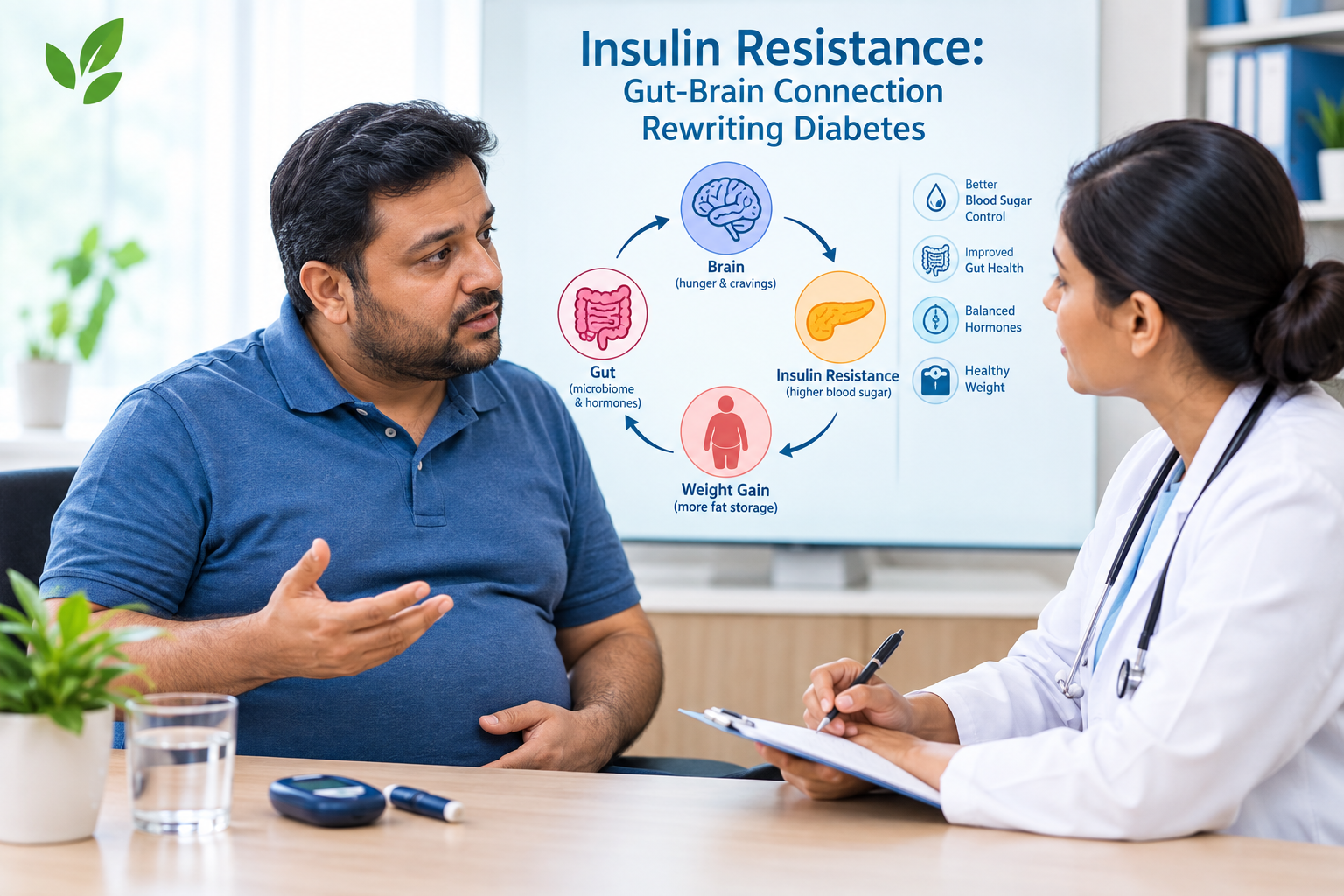
For decades, diabetes care has centered almost entirely on one hormone: insulin. But newer research is revealing a much bigger picture, one where insulin resistance, gut hormones, brain signaling, and even liver health are all working together to shape blood sugar control and body weight. Understanding this connection is changing how doctors think about diabetes and obesity, and it’s opening the door to a new generation of treatments that go far beyond the insulin injection.
In this article, we break down what insulin resistance really means, how the gut and brain communicate to control appetite and glucose, and why the future of diabetes care looks more like whole-body medicine than ever before.
Diabetes and Obesity Are No Longer Treated as Separate Problems
For a long time, diabetes and obesity were managed as two separate conditions — one focused on blood sugar, the other on weight. Today, medical research treats them as deeply connected parts of the same metabolic problem.
At the core of this connection is insulin resistance: a state where the body’s cells stop responding properly to insulin, forcing the pancreas to produce more and more of it. Over time, this leads to elevated blood sugar, weight gain (especially around the abdomen), and eventually type 2 diabetes. Excess body fat — particularly visceral fat around the organs — actively worsens insulin resistance, creating a cycle where obesity drives diabetes risk, and poor blood sugar control makes weight loss harder.
This is why modern diabetes care increasingly focuses on insulin sensitivity as a whole-body goal, not just blood sugar numbers on a lab report. Treating one condition without addressing the other often leads to limited, short-term results.
GLP-1, GIP, and Glucagon Receptor Drugs
One of the biggest shifts in diabetes medication has been the move toward drugs that act on multiple hormone systems at once, rather than targeting insulin alone.
- GLP-1 (glucagon-like peptide-1) slows digestion, boosts insulin release when blood sugar is high, and reduces appetite.
- GIP (glucose-dependent insulinotropic polypeptide) also stimulates insulin secretion and helps the body use fat more efficiently.
- Glucagon, typically associated with raising blood sugar, is being used in combination therapies to increase energy expenditure, helping offset weight gain.
Drugs like tirzepatide (a dual GLP-1/GIP agonist) and newer triple-hormone agonists such as retatrulide combine action across all three pathways. Early clinical trials show this multi-target approach can lead to significantly better blood sugar control and weight loss compared to older, single-hormone medications — though gastrointestinal side effects are more common, and long-term safety data is still being gathered.
Gut-Brain Axis and Blood Sugar: What You Need to Know
The gut-brain axis is one of the most important — and least talked about — systems influencing blood sugar and hunger.
Gut hormones regulate appetite mainly by acting as chemical messengers between the digestive system and the brain’s hunger-control centers.
Here’s how it works: after you eat, cells in your intestine release hormones like GLP-1, GIP, and others (such as PYY and CCK). These hormones travel through the bloodstream to the hypothalamus — the brain’s appetite-control hub — where they trigger a feeling of fullness and reduce the drive to keep eating. At the same time, they activate the vagus nerve, a direct nerve pathway between the gut and brain, reinforcing that same “I’m full” signal even faster.
These hormones also slow down gastric emptying (how quickly food leaves your stomach), which extends the feeling of fullness after a meal and reduces overall food intake.
In people with obesity or type 2 diabetes, this signaling is often weaker than normal — the gut still releases these hormones, but the brain doesn’t respond to them as strongly. This is a big part of why GLP-1-based medications work so well for appetite control: they essentially amplify a natural signal that the body isn’t producing or responding to efficiently on its own.
Why Newer Medications Target More Than Just Insulin
For years, the “incretin effect” — the body’s natural ability to release more insulin after eating than after an injection of glucose alone — was considered a minor detail. Now it’s understood as central to why type 2 diabetes develops in the first place. In many people with diabetes, this effect is blunted, meaning the gut’s hormonal signals to the pancreas are weaker than they should be.
This is exactly why incretin-based therapies have become such an important class of diabetes medication. Rather than simply supplementing insulin, they work to restore or amplify the body’s own hormonal signaling — improving insulin sensitivity, supporting weight loss, and addressing the root metabolic dysfunction rather than just the symptom of high blood sugar.
The Role of the Liver in Metabolic Health
The liver is often overlooked in diabetes conversations, but it plays an active role in blood sugar regulation and overall metabolic health.
MASLD (metabolic dysfunction-associated steatotic liver disease) — the updated name for what was previously called fatty liver disease — refers to excess fat buildup in the liver linked to insulin resistance, obesity, and type 2 diabetes, rather than alcohol use. The relationship works both ways: insulin resistance contributes to fat accumulating in the liver, and a fatty liver, in turn, worsens the body’s ability to respond to insulin. Left unmanaged, MASLD can progress to more serious liver inflammation and scarring.
Because of this close link, liver health is now considered an essential part of comprehensive diabetes care, not a separate concern to be addressed later.
Nutrition and Behavioral Health in Diabetes Management
Medication is only one part of the picture. Diet, physical activity, sleep, and mental health all directly influence insulin sensitivity and blood sugar control.
- Nutrition — Diets that limit ultra-processed foods and refined sugars help reduce the constant insulin spikes that drive resistance over time.
- Behavioral health — Chronic stress raises cortisol, which can worsen blood sugar control and encourage fat storage, while conditions like depression and anxiety are strongly linked to poorer diabetes management.
- Sleep and activity — Poor sleep and inactivity both independently worsen insulin sensitivity, regardless of diet.
This is why many diabetes specialists now recommend combining diabetes medication with structured nutrition guidance and mental health support — treating the person, not just the blood sugar number.
How Does Gut Bacteria Affect Insulin Sensitivity?
Emerging research points to the gut microbiome — the trillions of bacteria living in the digestive tract — as another key player in metabolic health. An imbalanced gut microbiome has been linked to increased inflammation and reduced insulin sensitivity, while a diverse, healthy gut microbiome appears to support better blood sugar regulation and may even influence how effectively the body responds to incretin hormones like GLP-1. While research is still developing, early evidence suggests that improving gut health may support weight management and overall metabolic function, making diet and gut health an area of growing interest in diabetes care.
New Diabetes Treatments in 2026
The diabetes treatment landscape is evolving quickly. American Diabetes Association provides notable developments in treatments and care for diabetic patients.
- Triple-hormone agonist drugs like retatrutide, which target GLP-1, GIP, and glucagon receptors simultaneously for greater weight loss and blood sugar control.
- Expanded continuous glucose monitoring (CGM) access, now recommended for a broader range of patients, not just those on insulin.
- Simplified automated insulin delivery (AID) systems, with fewer barriers to starting therapy.
- Ongoing type 1 diabetes research, including stem cell-derived islet replacement therapies aimed at restoring the body’s natural insulin production.
Together, these advances reflect a broader shift: diabetes care in 2026 is less about managing a single number and more about supporting the whole metabolic system. At Heal Genesis Pharma, we’re committed to helping patients navigate this evolving landscape with access to trusted medications, up-to-date treatment options, and guidance rooted in the latest research on insulin resistance, gut-brain health, and metabolic care. Our team works to bridge the gap between emerging science and everyday care, offering expert-backed resources so patients and healthcare providers can make informed decisions together. Whether you’re exploring new treatment options or looking to better understand your condition, Heal Genesis Pharma is here to support a whole-body approach to lasting health.
FAQs
Why am I still gaining weight with diabetes?
Insulin resistance can make weight loss harder because the body produces excess insulin, which encourages fat storage. Medication type, diet quality, sleep, stress, and gut hormone imbalances can all play a role — it’s rarely about willpower alone.
Is obesity connected to diabetes?
Yes. Obesity, particularly excess abdominal fat, is one of the strongest risk factors for insulin resistance and type 2 diabetes. The two conditions often feed into each other, which is why they’re increasingly treated together.
What are the natural ways to support gut-brain health?
Eating fiber-rich whole foods, reducing ultra-processed food intake, managing stress, prioritizing sleep, and staying physically active can all support healthy gut-brain signaling and hormone regulation.
“What Is the Connection Between Diabetes and Liver Health?”
Insulin resistance contributes to fat buildup in the liver (MASLD), and a fatty liver can further impair the body’s ability to regulate blood sugar — creating a cycle that makes both conditions harder to manage if left untreated.
What is the relation between diabetes and mental health?
Chronic stress, anxiety, and depression can raise cortisol levels and disrupt eating and sleep patterns, both of which negatively affect blood sugar control. Managing mental health is now considered a core part of diabetes treatment.
How does the gut affect blood sugar?
Gut hormones like GLP-1 and GIP are released after eating and signal the pancreas to release insulin, slow digestion, and communicate fullness to the brain — directly influencing how blood sugar rises and falls after meals.
How do gut hormones regulate appetite?
They act on hunger and satiety centers in the brain, particularly the hypothalamus, sending signals that reduce cravings and promote a feeling of fullness after eating.
Can improving gut health help with weight management?
Early research suggests a healthier, more diverse gut microbiome may support better insulin sensitivity and hormone regulation, which could aid in weight management — though more research is needed to confirm long-term effects.
This article is for general educational purposes and does not replace professional medical advice. Individuals managing diabetes or obesity should consult their healthcare provider before making changes to treatment or lifestyle.